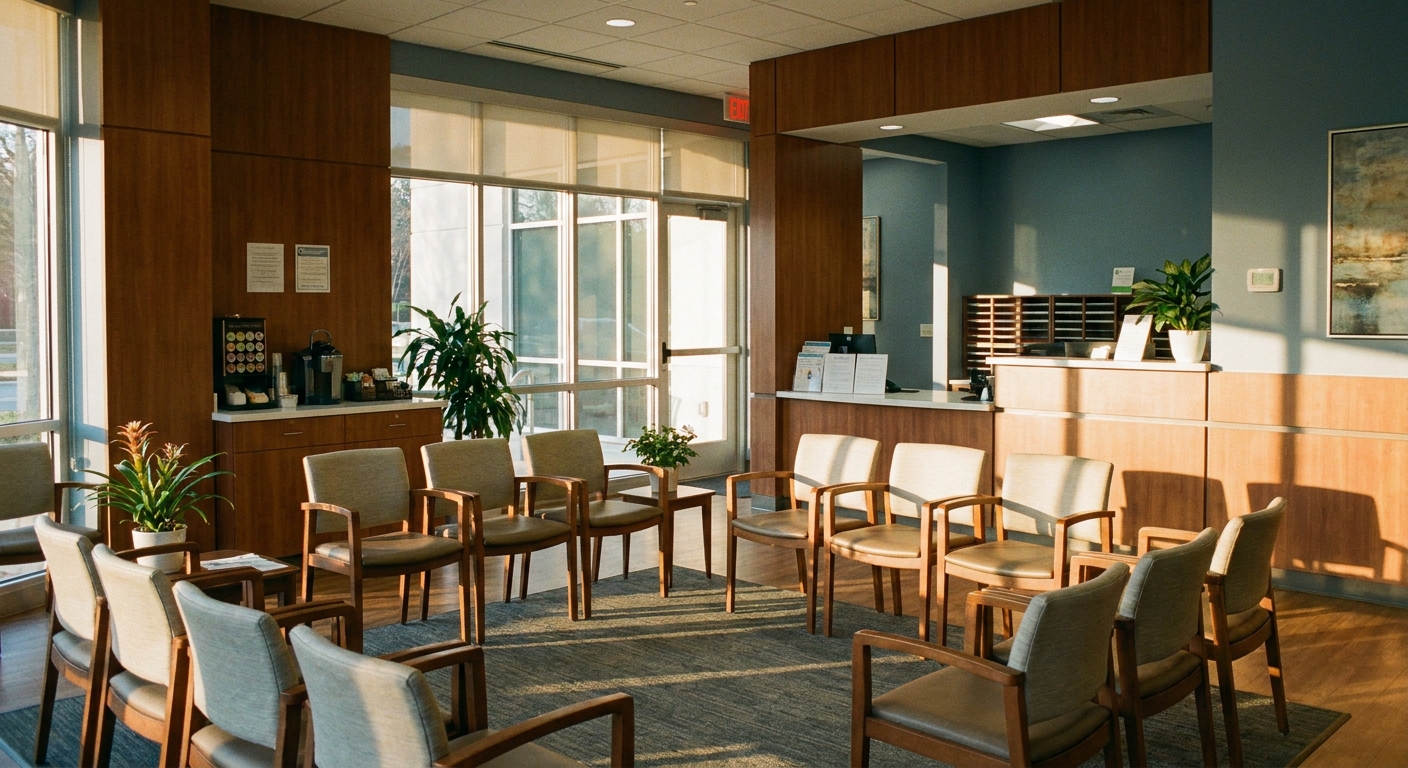
The intake coordinator told you to arrive by 5:45 a.m. for your first dose, and when you asked why so early, she said, “because you have a job to get to.” That single answer told you more about this North Fulton Treatment Center program than any brochure could. Most people trying to picture what to expect in outpatient opioid treatment have no map for the daily rhythm: what time you show up, how long it takes to feel steady, and whether the clinic will treat you like a person or a number in a line. This is the honest, hour-by-hour version, written for someone who still has a shift, a family, and a life to hold together while seeking recovery.
The First Two Weeks Are About Medication Stabilization
The first fourteen days are about medication stabilization, not finishing treatment. Your task during this stretch is not to feel cured. It is to help the medical team find the dose that may reduce withdrawal and cravings without leaving you sedated or high.
Here is the part most clinics never explain. At North Fulton Treatment Center, each therapy session in these early days opens with a medication check-in that runs about ten minutes. During that check-in, the medical director looks at how your body is responding. Are you still waking up sick? Are cravings pulling at you by mid-afternoon? Is the dose leaving you groggy? The answers guide small, careful adjustments. Levels move up until you may feel more functional. That middle zone, where some people report feeling steady enough to work and think more clearly, is one target, though individual responses vary widely.
This matters because opioids leave the receptors in your brain in a state of dysregulation when you stop. A dose that is too low may allow withdrawal symptoms to return by evening, while a dose that is too high may cause sedation. Finding an appropriate amount takes days of observation, not a single guess on day one. Some people find a level that works for them in the ten-to-fourteen-day window, though your timeline may be different.
Picture your third morning. You dose at 5:45, sit down with your counselor, and admit cravings were intense around 3 p.m. yesterday. That detail is not small talk. It is clinical data, and it may inform whether your dose gets adjusted that same week. The CDC clinical guidance treats medication as a first-line approach for opioid use disorder, and this steady, observed induction is one way that guidance translates into daily practice.
How Do Methadone and Buprenorphine Dosing Schedules Work Day to Day?
Your medication influences your routine. People on methadone dose on-site at North Fulton Treatment Center Monday through Saturday and may earn take-home privileges as their drug screens stay negative, while people on buprenorphine may receive a prescription once they appear stable. Both paths keep you connected to clinical oversight.
The North Fulton Treatment Center methadone side runs as a federally regulated opioid treatment program. That means the medication is dispensed and witnessed at the clinic six days a week in the early stage. It sounds rigid, and there is a reason for it. Methadone is powerful, and the daily visit builds a routine, a face-to-face touchpoint, and a safety check all at once. As you demonstrate stability through consecutive negative screens, that daily requirement may ease. The rules that govern how take-homes are earned are laid out in the Federal Guidelines for Opioid Treatment Programs, and they exist to support safety rather than restrict access indefinitely.
Buprenorphine, most often known as Suboxone, works differently. Because of how the medication behaves in the body, many people who meet clinical criteria can move to a prescription after they stabilize, filling it and dosing at home. North Fulton Treatment Center also offers Sublocade, the extended-release buprenorphine injection, for people who may do better with a monthly shot than a daily pill. The point is that there is no single schedule. Your medication, your history, and your progress shape whether you are on-site daily or managing a prescription with regular check-ins.
What stays constant across both paths is the clinical relationship. This is not a vending machine. Whether you dose methadone at the window or carry a buprenorphine prescription, someone qualified is observing how you respond and may adjust the plan.
What Does Real Therapy Look Like Here, Not Just a Medication Window?
Real outpatient opioid treatment means individual counseling built into your schedule, not a five-minute stop at a dosing window. The medicine may help settle your body. The therapy is where you work to rebuild the parts of your life that opioid use affected.
The difference shows up in a number most clinics will not tell you. North Fulton Treatment Center holds its counselor-to-patient ratio at 30 to 35 patients per counselor, compared to a state-recommended level of 50 to 1. That gap is not a marketing line. It is the difference between a master’s-level licensed clinician who may know your name, your triggers, and your goals, and a system where a staffer is simply moving bodies through a line. When one counselor carries fifty people, “therapy” may become a signature on a form. When the number is closer to thirty, the session may become an actual conversation, though individual experiences vary.
That is why this North Fulton Treatment Center program does not offer medication-only maintenance without therapy. Medication management here is paired with counseling, because settling the receptors in your brain does not repair a marriage, a job history, or the shame you may have been carrying. In session, you might work through the relationship that keeps pulling you toward use, the sleep you have not gotten in years, or the plan for the family holiday you are dreading. This mirrors what national treatment guidance has long held: medication and counseling are partners, not substitutes.
Think about week three. You dose, then sit with the same clinician you saw last week, and instead of “see you Tuesday,” you may be asked what you want to work on next. That question only exists in a program staffed to have it.
Clinic Hours Built Around People Who Still Have a Job
The North Fulton Treatment Center clinic opens at 5:30 a.m. on weekdays and 7:30 a.m. on Saturdays, so you may be able to dose, meet with your counselor, and still clock in for your shift. Those hours are a deliberate answer to the life you actually live in the North Fulton corridor.
Here is why it matters. People in Roswell, Alpharetta, Sandy Springs, and Johns Creek hold down jobs, raise kids, and cannot vanish for thirty days without losing the very things they are trying to protect. A clinic that only opens at 9 a.m. may force an impossible choice between recovery and a paycheck. A 5:30 a.m. door means you may be able to get your medication, spend real time with your counselor, and be at work on time with no one asking where you were. Discretion and employment may survive together.
This is the practical heart of what to expect in outpatient opioid treatment done thoughtfully. It should bend around your responsibilities, not the other way around. The early hours also thin the crowd, which means less time standing in line and more privacy on your way in and out. For someone who has quietly dreaded being seen, that small design choice removes a real barrier.
Consider a warehouse worker whose shift starts at 7. One patient dosed at 5:45, had a short counseling touchpoint, and was on the floor before her supervisor arrived. Nobody knew. Her recovery and her job stayed intact in the same morning. That is not a luxury. That is a program that understands the people it serves.
Who Qualifies for Outpatient Opioid Treatment, and Who Does Not?
Outpatient opioid treatment fits adults with an opioid use disorder who are medically stable enough to be treated while living at home. It is not the right level of care for everyone, and an ethical program will tell you the truth about that.
You do not have to return to use to qualify. If you are transitioning from a medical detox, stepping down from residential care, coming out of a correctional facility, or moving from another medication-assisted treatment program, you may be admitted without starting over. That policy protects momentum. Forcing someone who is already stable to first fall apart again is not clinical care, it is cruelty dressed as a rule. To be admitted here at North Fulton Treatment Center, you must have an opioid use disorder, be over 18, and generally have a history of misuse for at least a year, with room for exceptions like pregnancy or recent release from an institution.
Some people are not a fit, and honesty here is a form of respect. Someone with severe polysubstance use, acute medical instability, or a picture that may warrant inpatient care is not necessarily appropriate for treatment at the outpatient level, and anyone under 18 is referred elsewhere. In those cases, North Fulton Treatment Center does not simply take your insurance and hope for the best. It refers you out with at least three appropriate resources so you land somewhere that may be able to help. The clinical field uses structured placement criteria to match a person to the right setting based on medical risk and living situation, and that matching is what helps protect you from being placed in a level of care that may not keep you safe. Alcohol, worth noting, is not treated here as a primary substance use disorder.
What to Expect in Outpatient Opioid Treatment After You Stabilize
Once your dose may be holding and your drug screens stay negative, the structure may ease to support long-term stability instead of daily attendance. Take-home privileges at North Fulton Treatment Center are earned through consecutive negative screens, which may let you dose at home on weekdays and cut down on clinic visits as you demonstrate steady progress.
This shift may be the reward for the work of the first weeks, and it is regulated for your safety, not handed out casually. Each negative screen is a piece of evidence that you may be managing medication responsibly outside the clinic walls. As those pieces stack up, people on methadone may move toward take-homes and fewer trips to the window, while people on buprenorphine settle into a prescription rhythm with periodic check-ins. Some people stay on medication indefinitely, and that is a legitimate, evidence-supported choice, not a failure. There is no single correct finish line, and a good program does not rush you toward one.
What does not disappear is the therapy and the oversight. Maintenance is not abandonment. Your counselor stays in the picture, your medication is still managed by the medical director, and relapse prevention stays part of the plan. The founder here at North Fulton Treatment Center brings 24 years in this work, a quiet marker of how seriously stability and safety are taken. Stability is not the end of care. It is the point where care starts fitting into the background of a life you are rebuilding.
Common Questions About What to Expect in Outpatient Opioid Treatment
How long does it take to stabilize on methadone or buprenorphine?
Some people stabilize within 10 to 14 days, though the timeline varies by individual. The medical director adjusts your dose based on your withdrawal symptoms and cravings during short check-ins, moving levels until the medicine may control symptoms without sedating you.
Can I work while attending outpatient opioid treatment?
Yes. The clinic opens at 5:30 a.m. on weekdays and 7:30 a.m. on Saturdays so you may be able to dose and meet with your counselor before your shift begins, which may let you keep your job while you stabilize.
Do I have to dose at the clinic every day forever?
No. People on methadone may earn take-home doses through consecutive negative drug screens, and people on buprenorphine may move to a prescription after stabilization, so you may come in less often as you demonstrate stability.
What if I am coming from detox or jail, do I have to return to use first?
No. People transitioning from detox, residential care, a correctional facility, or another medication-assisted treatment program can be admitted without a relapse, so you may keep your progress instead of starting over.
Is medication the only thing I get in outpatient opioid treatment?
No. Individual therapy with master’s-level licensed clinicians is built into the schedule. This program does not offer medication-only maintenance, because counseling and medication work together.
What happens if outpatient treatment is not working for me?
A responsible program reassesses your needs and, if a higher level of care may fit better, refers you to inpatient or residential treatment with real resources rather than keeping you where you may not be able to stabilize.
Call North Fulton Treatment Center in Roswell, GA to schedule an intake assessment and find out if outpatient opioid treatment fits your schedule and clinical needs. Ask one specific question when you call: what time can I dose and still make my shift? The answer will tell you, the same way it told the person in that opening line, whether a program was built around your life or around its own convenience.
Take the First Step Toward Recovery
Starting outpatient opioid treatment takes courage, and it’s natural to have questions about what the journey will look like. The team at North Fulton Treatment Center in Roswell, GA understands that medication-assisted treatment works differently for everyone, and we’re here to walk alongside you through each phase of your recovery. If you’re ready to learn more about how our outpatient program can support your specific needs, we’re ready to listen.
Call North Fulton Treatment Center
Individual responses to treatment vary. The experiences described reflect one patient’s timeline and may not represent typical results.